Don’t Measure That! aka When is a KPI Not a KPI?
Understanding Effective Performance Measurement for Professional Services Firms
Data is exciting (and a little dangerous). Knowledge is actionable. This article aims to empower you to turn data into knowledge in a way that makes a true difference in how you run your firm.
It is important to place the conversation about measuring data in the frame it belongs in: you are measuring people. People with motivation, commitment, lack of training, bad habits, missing systems, and lots of creativity. And the data you are measuring? It is input by those same fallible, wonderful human beings that make up your team.
That said, Key Performance Indicators (KPIs) are essential tools for measuring success and driving business performance. When done well, they tell us how we are doing and help us uncover what is needed to reach our well-crafted targets. However, not all metrics that are labeled as KPIs serve their intended purpose and when mis-used can be (at best) a waste of time, and (at worst) a source of confusion and unnecessary stress and anxiety.
Understanding when a KPI is truly effective is crucial for A&E firms striving for operational excellence and strategic growth.
Defining KPIs
At their core, KPIs are measurable values that demonstrate how effectively a company is achieving key business objectives over time. They provide insights into performance, helping firms track progress and make informed decisions.
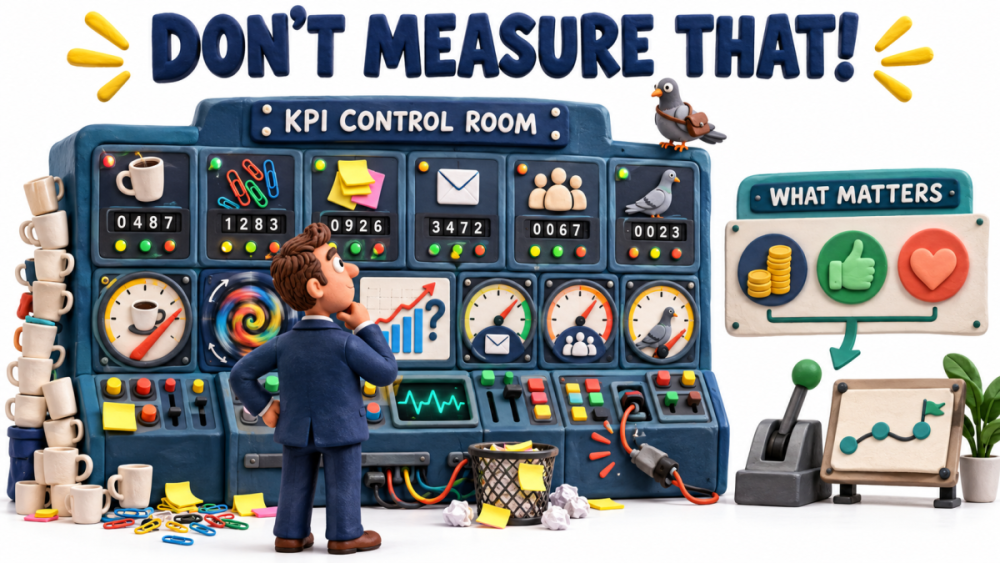
Smart people love data… sometimes a little too much.
Let’s start with a quick suggestion – choose a few metrics, and choose them wisely.
In fact start by identifying just one metric that would be the most powerful for you to stay on top of and understand at a deep causational level. Hint: we suggest your gross margin percentage.
Where are we now? Where do we want to be?
Importantly – there are two ways to use KPIs:
- watching healthy KPIs to ensure everything stays on track
- setting up a KPI to track a concerning ratio or measurement.
Let’s look at the second: If you have benchmarked your firm and discovered that your billability, efficiency, gross margin or other data point is low relative to your goal productivity, or if you are concerned about employee engagement and have done a survey that shows you that you have some challenges, this is just the starting point.
Backward engineer those numbers into causation and then defining specific initiatives or projects aimed to improve that number to a specific target and the determining what the leading and lagging data points are that will indicate if your initiative is working.
Identify who will be responsible for each initiative and delegate appropriate authority and accountability to them in order to set up a cadence of review and adjustment.
Effective KPIs share several characteristics:
- They are a measurement in relation to a target and initiative that is current and active in the company goals
- They show a trend over time, not just a snapshot
- They measure what matters, in a way that is meaningful
- They are based on reliable data that produces information to which you can (and will) respond
- They are understood – what causes variations, and the root cause or causes of those that need to be explored as well
- They are balanced with other needs of the firm, including change management, staff engagement, values, and culture
When aligned with vision, values, and strategic goals, KPIs allow you to assess, not just a baseline but, the results of the initiatives you have underway toward achieving desired outcomes.
Common Pitfalls
Despite their importance, many firms fall into common pitfalls that render their KPIs ineffective:
Lack of Relevance: A KPI can quickly become obsolete if it no longer aligns with the firm’s current goals or the evolving market landscape. For instance, a KPI focused on the number of projects completed may lose significance if the firm shifts its strategy toward quality over quantity.
Overcomplication: KPIs should be straightforward and easy to understand. When KPIs become overly complex, they can lead to confusion among team members, making it difficult to derive actionable insights. For example, a KPI that combines multiple metrics into one may obscure the underlying performance drivers.
Data Quality Issues: The accuracy of KPIs is only as good as the data that feeds them. Poor data quality can lead to misleading results, causing firms to make decisions based on inaccurate information. A&E firms must ensure that their data collection processes are robust and reliable to maintain the integrity of their KPIs.
When KPIs Become Misleading
Even well-defined KPIs can become misleading if not managed properly:
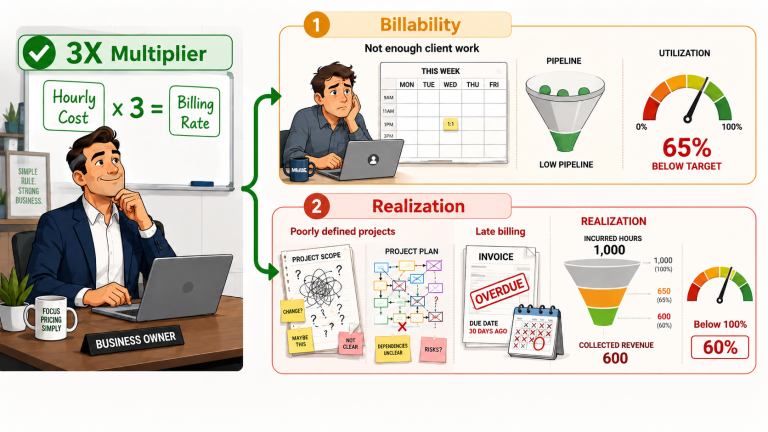
Disagreement on Definitions: I have a whole soap box speech about the dangers of tracking your Utilization Rate, but I will limit it here to the fact that there are at least 3 solid ways to define utilization rate in order to set appropriate targets. The range in appropriate can swing as far as 30% depending on which definition you are using. And your team members will have their own definitions and beliefs about what utilization is and how, or if, it should be used.
Misinterpretation of Data: KPIs can be misinterpreted, leading to incorrect conclusions about business performance. For instance, if a firm focuses solely on revenue growth without considering profitability at the corporate level, it will overlook critical information that could jeopardize long-term sustainability.
Focus on Vanity Metrics: Vanity metrics are those that look impressive but do not contribute to meaningful business outcomes. For example, tracking social media likes may seem beneficial, but if it doesn’t translate into client engagement or project wins, it’s not a true KPI for A&E firms.
Inflexibility: Rigid adherence to KPIs can stifle innovation and adaptability and can set up the circumstances that lead to employee disengagement and burnout. In a dynamic industry like A&E, where project requirements and client expectations can change rapidly, firms must be willing to adjust to new realities.
Transforming Ineffective KPIs into Actionable Insights
To ensure that KPIs remain effective, A&E firms should adopt several best practices:
Be Intentional: Book a consultation with a CFO to explore your financials and identify performance gaps. Understand the various factors that contribute to the key numbers that you are looking for and dig into the story behind those numbers to identify what matters most to you based on your firm’s maturity and strategic goals.
Regular Review and Adjustment: KPIs should not be set in stone. Regularly reviewing and adjusting KPIs ensures they remain relevant and aligned with business objectives. This practice allows firms to pivot quickly in response to changing market conditions.
Engaging Stakeholders: Involving team members in the KPI development process fosters buy-in and ensures that the metrics are relevant to their work. When employees understand how their contributions impact KPIs, they are more likely to be motivated to achieve them.
Fostering a Data-Driven Culture: A culture that values data accuracy and interpretation will lead to more effective KPI utilization. A&E firms should invest in training and resources that empower employees to understand and leverage data in their decision-making processes.